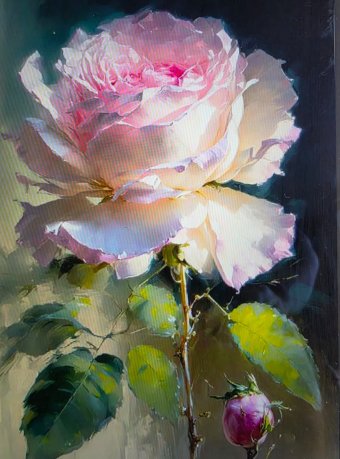
Future of Art 2030: Holograms & Painting


From Screen to Presence: The Evolution of Digital Art
Today, art online means staring at a flat screen. We look at masterpieces through pixels, scroll through virtual exhibitions on tablets, and share what we see on social media. Even VR and 3D viewing only create an illusion of depth. We're still just observers, not participants.But the future of digital art promises something different. By 2030, art won't be a two-dimensional image anymore. It'll become a full multi-sensory space you can step into. Thanks to rapid advances in data transfer—especially 6G networks—artwork will stop being flat and become immersive experiences you can feel, touch, even smell.
This is when artists create more than visual images. They'll build spaces of sensation—scent, sound, texture, light—that you literally enter with your whole being.
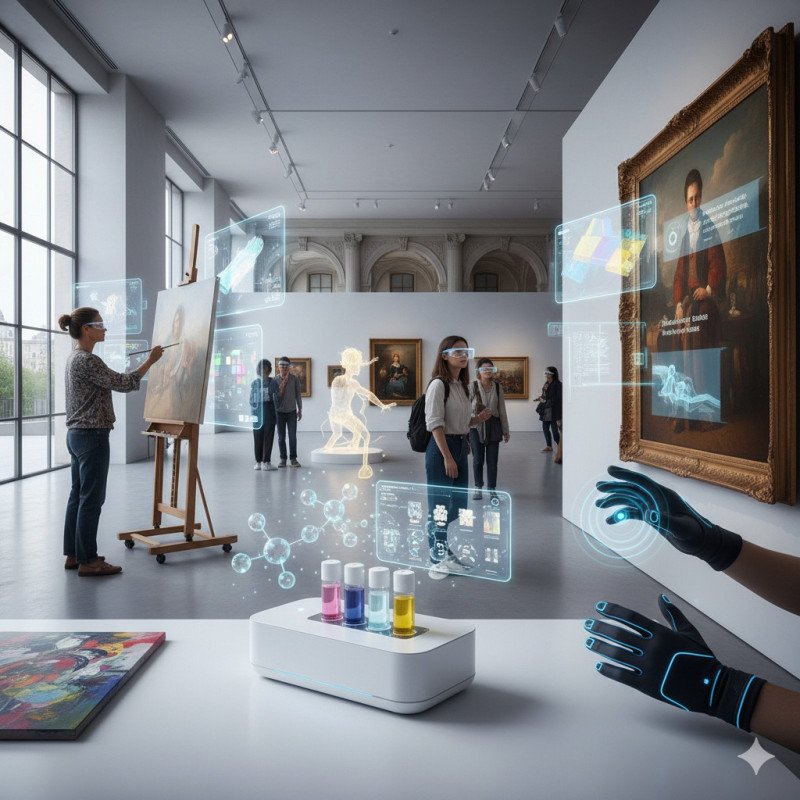
Why 2030 Is the Technology Tipping Point
The Ultra-Fast Data Revolution
By 2030, 6G won't be a futuristic fantasy. It's a calculated technological step. Leading research centers and telecom giants like Nokia, Samsung, Huawei, Ericsson, and NTT have been running lab tests for years now, hitting data transfer speeds of 100 Gbps—and in some experiments, over 900 Gbps.
That's almost a terabit per second. A hundred times faster than 5G. For context: at that speed, you could download a 4K movie in a split second, and a museum-quality holographic image in just moments.
Standardization and Commercialization
International standards organizations like 3GPP and ITU are already building technical specs for 6G. First commercial networks are expected right around 2029–2030, following the historical mobile network cycle:
- 4G — commercial launch in 2010
- 5G — mass rollout from 2020
- 6G — expected by 2030
Key 6G Parameters for Art:
Data transfer speed: Up to 1 Tbps (1000 Gbps)—enough to stream museum-quality holographic images in real time.
Ultra-low latency: Less than 0.1 milliseconds, letting you transmit tactile sensations and interactive reactions without any lag.
New frequency ranges: Sub-terahertz frequencies (100 GHz — 1 THz) that can carry massive amounts of data needed for holograms, sensory feeds, and scent streams.
Mass connectivity: Up to 10 million devices per square kilometer—perfect for interactive art installations in urban spaces.
These parameters open the door to the "internet of senses"—where the digital world isn't just something you see and hear, but something you fully experience.
Holographic Art — The New Canvas
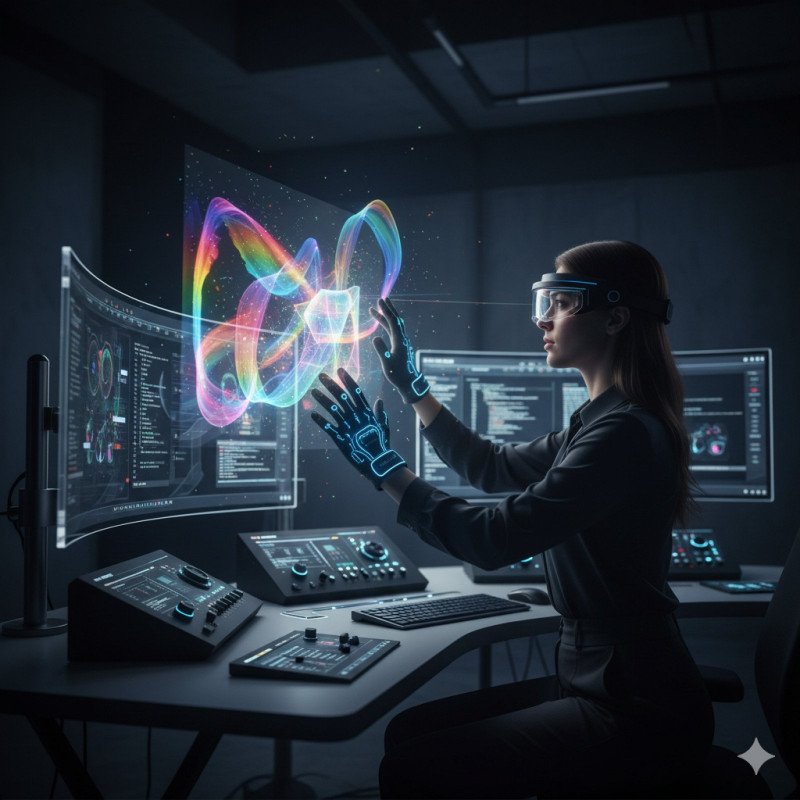
From Flat Image to Volumetric Presence
If holograms today are just exhibition tricks that need special equipment and dark rooms, by 2030 they'll be the main language of online art. As natural as looking at images on your phone screen today.
Light-Field Technology: How It Works
Light-field cameras don't just capture flat images. They record complete information about light rays in space:
- Multi-plane capture: Special cameras record light rays across dozens of different planes, creating a digital "volume of light"—a complete map of how light spreads around an object.
- Data transmission: This massive information stream transfers at speeds fast enough to recreate live, dynamic images in your space.
- Playback: Through special transparent displays, holographic projectors, or next-gen AR glasses, you see a full three-dimensional artwork floating in air.
A New Way to Experience Art
Picture immersive online art galleries where you can:
- Walk around a sculpture from all sides without leaving home
- Examine Van Gogh's brushstrokes from any angle
- Zoom in on details as if you're standing inches from the original
- Change the lighting to see how the piece looked by candlelight or morning sun
The painting stops being a window to another world. It becomes a space you physically inhabit.
This revolution in art and technology will change forever how we create, share, and experience artwork. For collectors interested in contemporary art, this means unprecedented access to works without physical barriers.
Scent and Memory: Smell as Part of the Composition
The Neurobiology of Scent and Emotion
Here's a surprising fact from neurobiology: the olfactory system is the only sense directly connected to the limbic system of the brain, which handles emotions and memory. That's why a familiar scent can instantly transport you to childhood or revive a long-forgotten memory.
Sensory art of the future will actively use this feature of human perception.
Digital Scents: The Technology of Smell
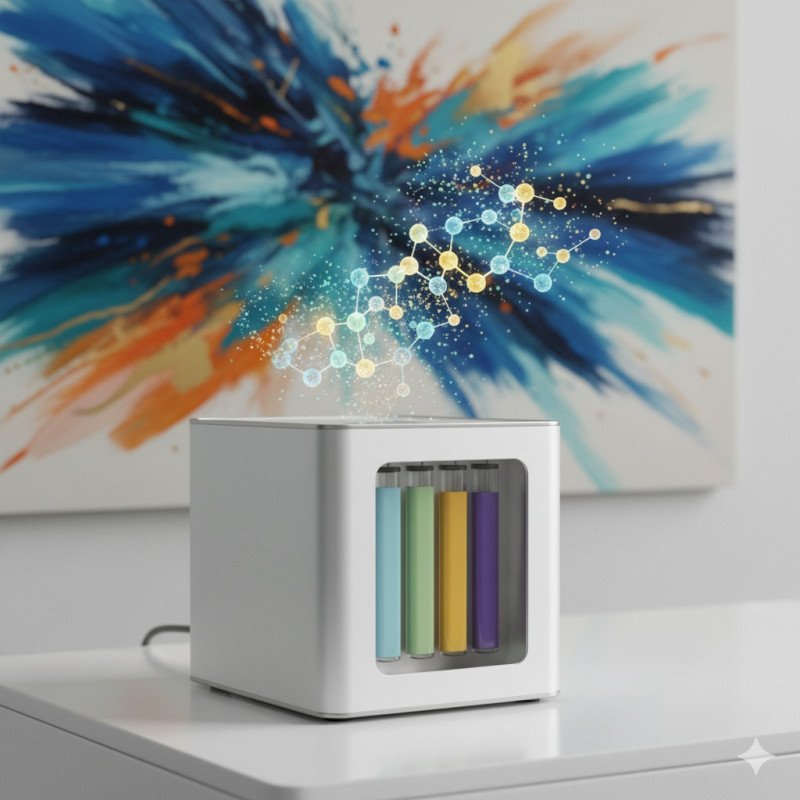
Modern labs and startups like Aromajoin in Japan and OVR Technology in the US are already testing digital diffusers—devices that can reproduce thousands of different scents from a digital "code":
How it works:
- Cartridge system: The device contains a set of basic aromatic molecules (like a painter's color palette).
- Digital scent code: The artist creates an "aromatic file"—a digital formula defining which molecules to mix and in what proportions.
- Synchronization: When viewing the artwork, the diffuser receives a signal and releases the corresponding scent at the right moment.
Practical Application in Art
In next-generation art, scents become a full expressive medium:
- A seascape smells like salt wind and seaweed
- A portrait might carry warm perfume notes from that era
- A still life with fruit releases the scent of ripe peaches and fresh bread
- An abstract composition uses scents to create emotional associations
Scent is the bridge between art and our deepest human memories.
Tactile Internet: Art You Can Touch
Haptic Feedback Technology
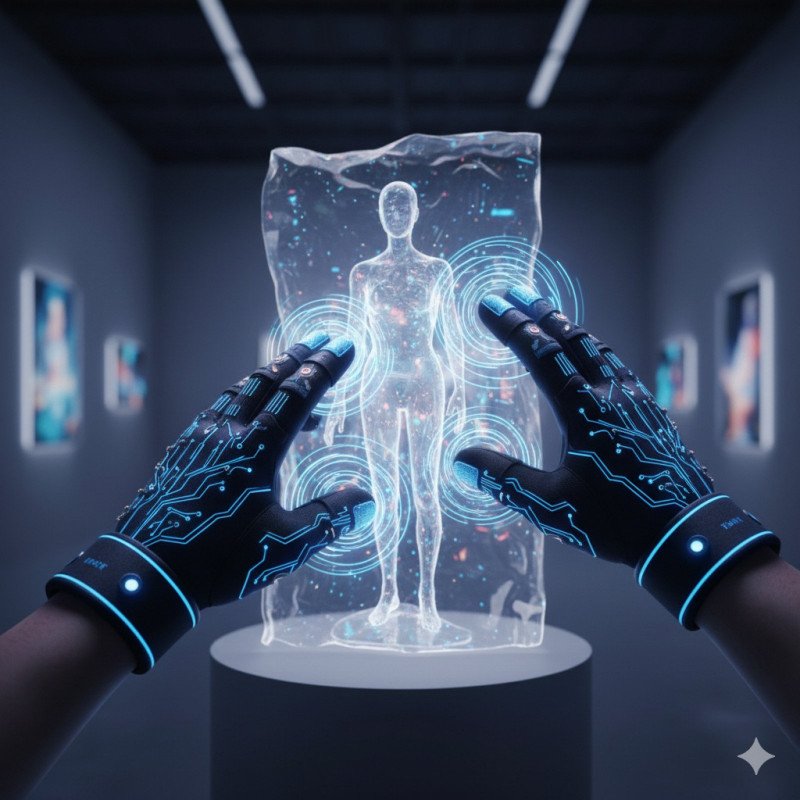
The tactile internet is a key concept for the future of art by 2030. Advanced haptic devices are already being developed that transmit sensations of texture, temperature, and pressure through:
- Micro-vibrations: Precise vibrating elements create the illusion of different surfaces.
- Ultrasonic waves: Form "air cushions" that mimic touching volumetric objects.
- Thermoelectric elements: Transmit the feeling of a material's warmth or coldness.
- Electrical stimulation: Affects nerve endings, creating sensations of various textures.
Application in Virtual Galleries
Imagine a virtual reality art experience where you can:
- Feel the rough texture of canvas and relief of oil brushstrokes on impressionist paintings
- Sense the cool smoothness of Michelangelo's marble sculpture
- Run your hand across the rough surface of an ancient fresco
- Touch the warm bronze of a modern installation
6G will give haptic devices perfect synchronization—no delay between your hand movement and the tactile response. This creates a complete illusion of physical presence in a gallery.
Tactility makes digital art material, giving it back physical authenticity.
Artificial Intelligence and Emotional Curation
AI as Your Personal Curator
By 2030, AI in art won't just be a tool for generating images. It'll be an intelligent interface between your emotional state and artworks.
Biometric Analysis and Adaptation
Modern AI systems can already analyze
- Facial micro-expressions: Determining your real emotional state (joy, sadness, anxiety, inspiration)
- Eye direction and focus: Understanding what catches your attention
- Heart rate and skin temperature: Reading physiological reactions to pieces
- Interaction time: Evaluating your level of engagement
Personalized Art Experience
Based on this data, AI in augmented reality galleries will:
When you're anxious: Show soft pastel landscapes, calm abstraction, with sounds of rain or rustling forests, lavender scents.
When you're inspired: Open dynamic holograms vibrating with bright colors and movement, energetic music, fresh citrus scents.
When you're melancholic: Offer deep, philosophical works with muted tones and minimalist sound environments.
When you're curious: Create interactive compositions that respond to your actions and invite exploration.
This approach makes choosing art for your home more intuitive and personal than ever before.
A New Level of Art Accessibility
This technology makes art truly accessible:
- Neurodiverse people get curation adapted to their perception style
- People with disabilities can experience art through their accessible sensory channels
- Beginners are gently introduced to the art world through familiar images and associations
- Experts access deep layers of interpretation and context
Classical Painting in the Technology Era: Why Oil on Canvas Won't Disappear
The Eternal Value of Material Art
With all this talk about holograms and virtual exhibitions, an important question comes up: what happens to traditional painting? Will it disappear in a world of digital technology?
The answer is clear: no. More than that, classical painting won't just survive—it'll gain new, deeper meaning.
Why Physical Art Is Irreplaceable
Authenticity and Uniqueness of Material Objects
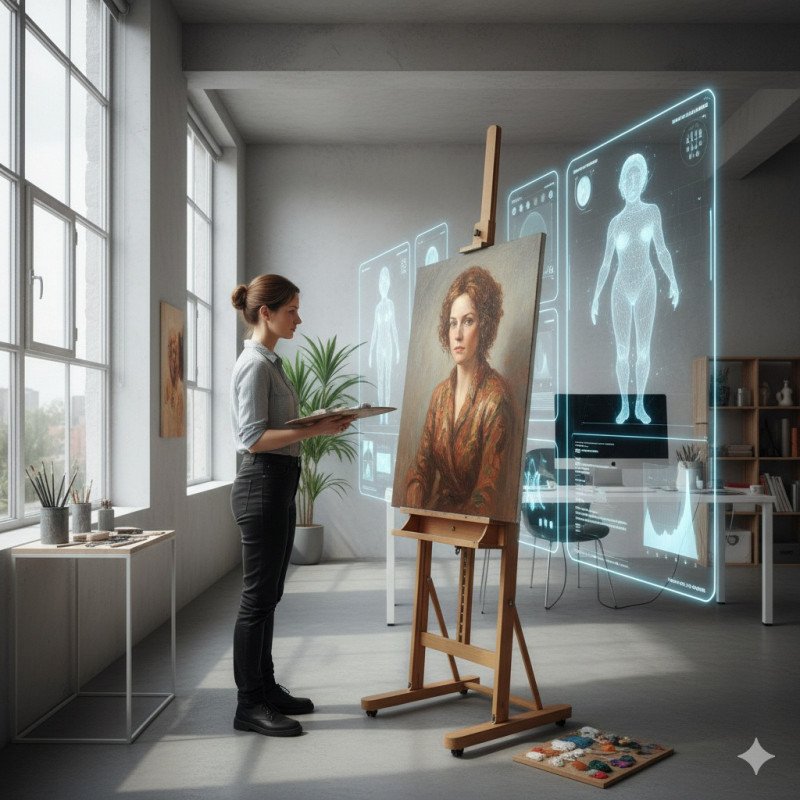
A physical painting isn't just an image. It's a material witness to time that carries:
- The texture of time: Every crack in the paint layer, every color change from age—these are part of the work's history
- The energy of creation: The artist's physical contact with canvas, traces of their movements, moods, doubts
- Authenticity of the moment: The painting was created in a specific place, at a specific time, by a specific person—this can't be reproduced
- Material value: Canvas, paints, stretcher bars—real materials with their own origin story
No hologram, no matter how perfect, can replace standing in front of a real Rembrandt or Van Gogh. It's like the difference between a photo of someone you love and their actual presence.
The Tactile Truth of Materials
When we look at a real painting in a museum, we subconsciously read lots of information:
- Brushstroke relief—visible even when we can't touch it
- The play of light on uneven paint surface
- Real dimensions—a sense of scale that gets lost on screens
- Presence in space—the painting occupies a real place in the real world
Even the most advanced tactile internet technologies can only imitate these sensations. But imitation and the real thing are fundamentally different experiences.
Evolution, Not Replacement: Symbiosis of Tradition and Technology
The key idea of the future of art by 2030 isn't digital versus physical. It's their harmonious coexistence and mutual enrichment. Many collectors starting an art collection will value both traditional and enhanced digital experiences.
How Classical Painting Integrates with New Technologies
1. Enhanced Perception of Classical Works

Imagine you're standing in the Louvre in front of Rembrandt's "The Return of the Prodigal Son." Through AR glasses you can:
- See paint layers—like X-ray vision showing preliminary sketches and the artist's corrections
- Travel through time—holographic reconstruction shows how the painting looked when it was created, before varnish darkened
- Dive into context—holographic scenes from the artist's life appear around the canvas, sounds of the era, scents of a 17th-century workshop
- Listen to the story—an AI guide adapted to your knowledge level reveals the symbolism and technique
But the physical painting remains the center of the experience. Technology only deepens understanding, not replacing the original.
2. Creation: Traditional Techniques in Digital Documentation
Modern artists working with oil, acrylic, or watercolor get new possibilities:
Documenting the process: Light-field cameras capture every brushstroke in volume—creating a "holographic time-lapse" of the painting's creation that can be reviewed from any angle.
Teaching and workshops: Students worldwide can observe master techniques through immersive art experiences—seeing not flat video, but a volumetric scene where they can "approach" the canvas and examine the exact brush movement.
Preserving technique: When a great artist passes, what remains isn't just their legacy, but a complete holographic record of their working method—priceless knowledge for future generations.
3. Hybrid Works: Painting as the Foundation of Multi-Sensory Experience
Many artists will start creating hybrid art—works where a physical painting is the foundation but gets supplemented with digital layers:
Example: "Living Landscape"
- Physical foundation: Traditional oil landscape painting
- Augmented reality: Viewing through AR activates cloud movement, grass swaying
- Sound layer: Rustling leaves, birds singing
- Aromatic layer: Scent of meadow grass and fresh wind
- Temporal dynamics: The painting "lives through" a day—morning light shifts to noon, then sunset
The physical painting remains a complete work you can contemplate without technology, but digital layers expand the experience for those who want deeper immersion. This is where art meets interior design in completely new ways.
4. New Life for Museum Collections
Museums worldwide get the ability to:
Global access without risk: The most fragile works that can't be displayed due to light and temperature concerns become accessible through perfect holographic copies—but originals stay safely stored.
Virtual temporary exhibitions: Paintings from museums worldwide can "gather" in one virtual exhibition without leaving their storage—solving insurance and transportation problems for priceless canvases.
Interactive education: Schoolchildren study Van Gogh's "Starry Night" by literally entering inside the painting—holographic reconstruction lets them walk the streets of Arles that the artist saw.
Revival of Interest in the Material
Here's the paradox: digital technology development will lead to a renaissance of traditional painting. When everything becomes virtual, the value of material things multiplies.
Trends we're already seeing:
Collecting physical works: People are willing to pay a premium for genuine paintings made by an artist's hand, not created by AI or printed.
Return to craftsmanship: Growing interest in classical painting techniques—tempera, fresco, encaustic. Art schools report increased enrollment in traditional painting courses.
"Slow art" movement: As a counterweight to instant digital culture, a "slow art" movement emerges—creating and contemplating art as meditative practice.
Status and prestige: Owning a real painting becomes even more prestigious—demonstrating taste, understanding of authenticity's value, connection to history.
Painting as an Anchor of Reality
In a world where more experience becomes virtual and ephemeral, physical art serves an important psychological function:
Connection to the material world: A painting on the wall reminds us that not everything exists as data. There's matter, texture, weight, presence.
Generational continuity: A painting can be passed down through a family for centuries, becoming a physical carrier of memory and history. Digital files get lost easily. Physical objects are harder to lose.
Contemplative practice: Sitting in front of a painting, slowly taking in details—this is an antidote to the information overload of the digital era.
The New Generation of Artists: Bilingual in Art
Artists of the 2030s will be art bilinguals—fluent in both traditional and digital media:
Morning—working with oil on canvas in the studio, creating a physical work with real texture and paint smell.
Afternoon—scanning what was created with a light-field camera, creating digital layers, programming interactive responses.
Evening—setting AI parameters for personalizing viewer experiences, composing aromatic profiles.
They'll understand the value of both worlds and know how to build bridges between them. Those working in abstract art will find particularly rich possibilities in this hybrid approach.
Galleries of the Future: Hybrid Spaces
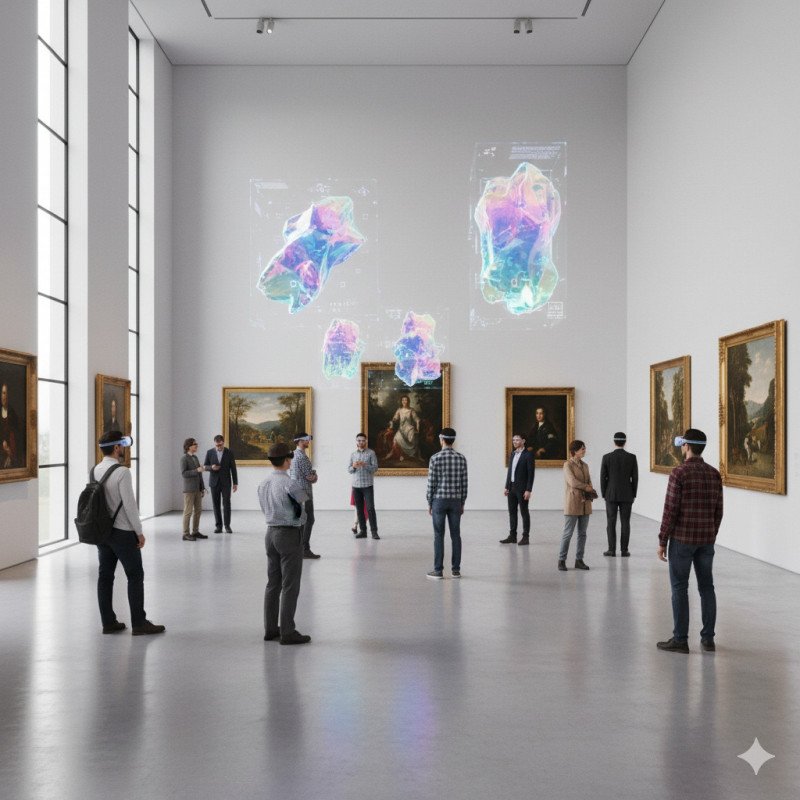
Physical art galleries won't disappear. They'll transform into hybrid spaces:
Physical level: Real paintings on walls—for those who value authenticity and materiality.
Augmented level: AR glasses available to visitors add informational and sensory layers.
Virtual level: Remote visitors can enter through a virtual reality portal—seeing holographic copies of paintings, but knowing they're copies of originals stored in the real gallery.
Exclusive experience: Presence before a real painting remains a privilege that technology can't fully replace—this stimulates visiting actual exhibitions.
Painting as a Medium of Resistance
In some sense, traditional painting becomes a form of cultural resistance to total digitization:
- It asserts the value of slow process in an era of instant results
- It recognizes the importance of imperfection and uniqueness in a world of perfect copies
- It connects to a millennia-old tradition of human creativity
"As long as there's a hand that can hold a brush and canvas that can accept paint, painting will live. Technologies don't replace it—they teach us to value it even more."
Art Market Transformation and Access Democratization
New Art Economics
The future of art will change not just how we create, but how we share work:
Global access: Anyone with the right equipment can visit virtual exhibitions at the Louvre, the Met, or MoMA from their living room.
NFT 2.0: Despite the recent NFT market collapse we analyzed in our article "Human Art in the Digital Age," the technology's future looks different. Tokens will be tied not to static images, but to complete sensory experiences—including unique holographic angles, exclusive aromatic profiles, and multi-sensory interactions that make each NFT a portal to an immersive art experience.
Collaborative creativity: Artists from different countries can work on one piece in real time, interacting with holographic projections of a shared canvas.
Educational Opportunities
Virtual master classes: Students can observe master techniques through holographic recordings, literally seeing every brushstroke from any angle.
Interactive art history: Studying art movements through immersion in recreated atmospheres of eras—with visual, sound, and aromatic characteristics of the time.
Conclusion: A Symphony of Senses in Harmony with Tradition
By 2030, art will become a full multi-sensory experience—a symphony of sensations where each note is color, light, scent, sound, or touch.
How technology is changing the art world isn't just adding new tools or replacing traditional art with digital. It's a fundamental transformation that expands possibilities while preserving roots.
Two Worlds, One Future
The artwork of the future exists simultaneously in two dimensions:
Physical dimension: Real canvas, oil paints, texture of brushstrokes—material reality that can't be replaced. This is the anchor of authenticity in a digital ocean.
Digital dimension: Holographic layers, sensory extensions, AI personalization—technologies that deepen and expand the experience of interacting with art.
We don't choose between them. We learn to speak both languages.
A New Definition of Art
Art stops being just an object we look at. It becomes:
- A space where we're present
- An experience that we live through
- A dialogue between artist, work, and viewer
- A bridge between digital and physical worlds
Traditional painting doesn't disappear—it remains the soul of this new world, its emotional and cultural foundation.
"In the future, artists won't paint with just brushes or light—they'll paint with both. Brush and algorithm, canvas and hologram, pigment and pixel—all will become part of a unified language of art."
Welcome to the future of art by 2030—an era of art without boundaries, but with deep roots.
Related Articles
- How to Create a Gallery Wall: A Step-by-Step Guide — preparing your space for the art of the future
- The Psychology of Color in Wall Art — understanding how colors affect emotions
- Top 7 Abstract Art Trends in 2025 — current directions in abstract art